
podcastmarketers
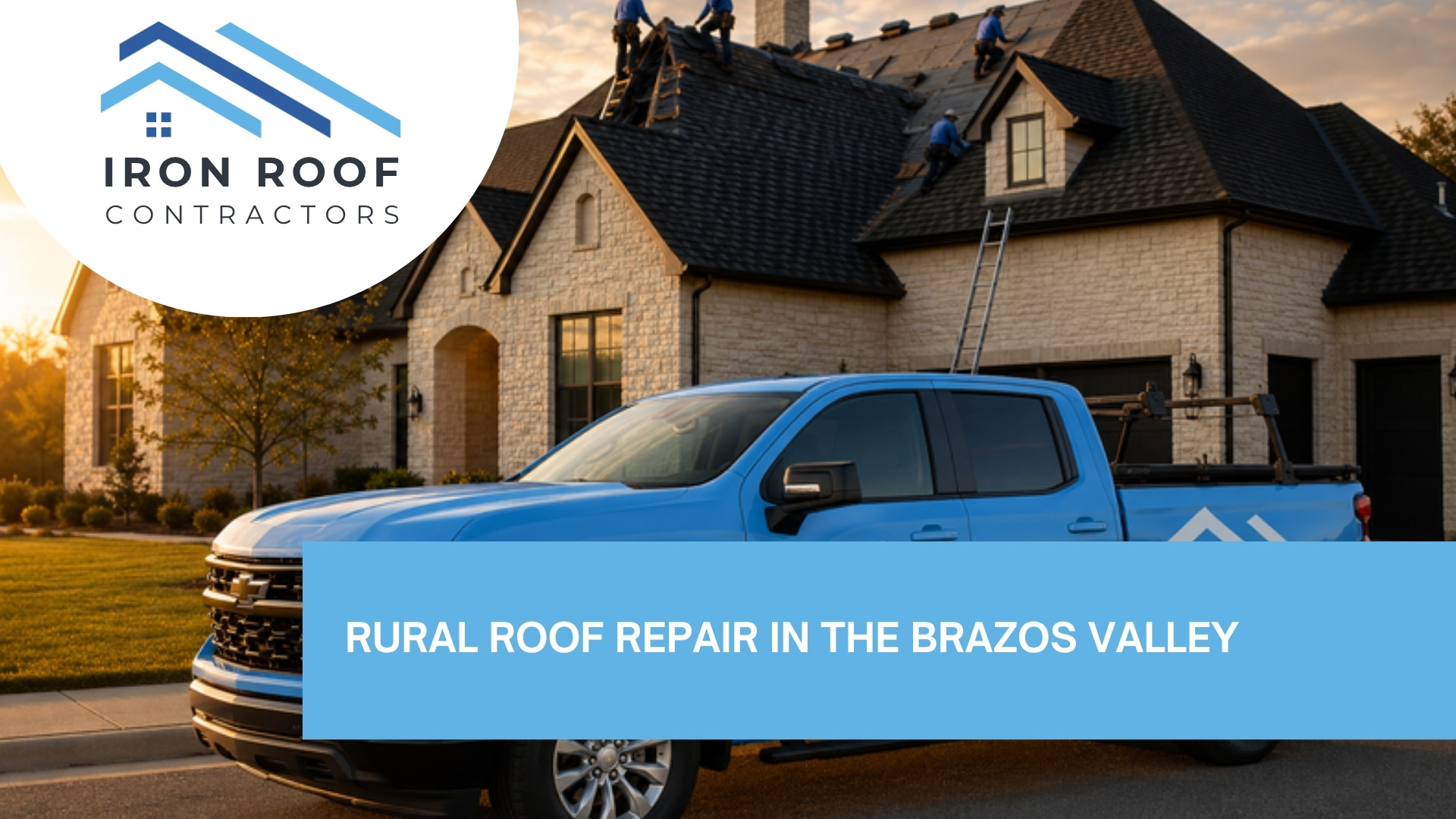
You’ve got a roof problem out on your property near Navasota. Maybe it’s the house, maybe it’s the shop, and you’re not sure who’ll come out for a repair or whether they know metal as well as shingles. That’s a fair thing to wonder, so here’s a plain guide to the rural roof repair Brazos Valley property owners run into most, and what to write down before you call.
Key Takeaways
- Rural roofs wear differently because open ground lets wind hit the edges at full strength, and nearby trees rub, drop limbs, and clog valleys.
- On exposed-fastener metal shops and barns, leaks usually start at the screws, dried-out washers, panel laps, or pipes coming through the roof.
- When the metal panels are still solid, loose fasteners and worn washers are usually a repair, not a reason to replace the whole roof.
- Older farmhouses often hide stacked shingle layers, aging board decking, and years of patches, so an honest quote starts with a real inspection.
- Before calling a roofer, note which building leaks, where water shows up inside, and whether it leaks every rain or only in wind-driven rain.
Why rural roofs wear differently
A roof in a College Station subdivision has neighbors close on every side, and their houses take some of the wind first. Out on acreage around Navasota, your roof may have nothing between it and open pasture, so wind hits the edges at full strength and works the same corners year after year.
Trees are the other half. A big pecan or post oak shading the house is one of the best parts of country living, but its limbs rub the shingles in the wind and come down in storms. The leaves pack into valleys and gutters and hold water against the roof.
Then there’s the construction. Plenty of country homes have been added onto over the decades, a porch one year and a bedroom later, each roofed by a different crew. And the house is rarely the only roof on the place. You might have shingles on the house, corrugated metal on the shop, and a barn older than both. Each wears on its own schedule, which is why one roofer who knows shingle and metal saves you a pile of phone calls.
The rural roof repair Brazos Valley properties need most
Lifted or missing shingles on the exposed side
The slope facing open ground takes the most wind. The seal under a shingle lets go, the tab lifts in every gust, and eventually a few blow off. Caught early, that’s usually a spot repair.
Limb damage
A falling branch can crack shingles or punch into the decking. One that rubs the same spot for months can wear a shingle bare. Both look smaller from the ground than up close. If a storm brought the limb down, photograph everything before it’s moved. A claim may be an option; that’s between you and your carrier, and under Texas law the deductible is yours to pay.
Flashing on porches and add-ons
Where a porch roof ties into the house wall, a strip of metal flashing keeps water from running behind the roof. On older additions that flashing was sometimes skipped, sealed with tar, or buried under a later re-roof. A real flashing repair means replacing or resetting the metal, not smearing more sealant over it.
Leaks where an addition meets the original house
Two roofs built at different times, often at different pitches, meet in a valley or along a wall, and every rain gets funneled toward that joint. If the stain inside sits right where the old house ends and the addition begins, that joint is the first suspect. If you’re still hunting for the source, our guide to why your roof is leaking walks through the usual causes.
Metal barn roof repair: usually a fix, not a new roof
Many metal shops and barns have exposed-fastener panels: corrugated or ribbed sheets held down by screws driven straight through the metal. Each screw has a rubber washer under its head that seals the hole. It’s a simple, tough design with a few predictable weak spots.
Washers are the big one. Years of Texas sun dry them out until they crack, and the seal around the screw goes with them. Screws also back out as metal heats up in the afternoon and cools at night, working fasteners loose a little at a time. A screw driven too tight on install day crushes its washer from the start, and one that missed the framing underneath never sealed at all.
Rust usually starts where water sits: at the laps where panels overlap, along cut edges, and near the eave. Pipes and stove flues coming through the roof are the other common leak point, especially when their flashing was an afterthought.
When the panels themselves are still solid, most of this is repair work. New fasteners, sealed laps, and proper flashing around a pipe can put a leaky shop roof back in service without a new roof. Replacement comes up when rust has eaten through panels in more than a few spots, or the patches have started leaking too. You should know which one you’re looking at before anybody quotes you.
Please don’t go up and start swapping screws yourself. Metal panels get slick with a little morning dew, and older ones can be thin enough to buckle under a boot. A good shop roof repair starts with someone who has the right gear for it. For more on the material itself, our metal roof page goes deeper.
Farmhouse roof repair starts with an honest look
An older farmhouse roof usually has a history, and not all of it shows. It’s common to find newer shingles nailed right over an old layer, and now and then a third layer under that. Some older homes also have board decking, planks across the rafters instead of plywood sheets. Boards can stay solid for decades, but they can also hide soft spots nobody has seen since the last re-roof.
Then come the patches: roof cement smeared around the chimney, or a square of tin nailed over a problem spot. Each one tells you somebody fixed something once. It doesn’t tell you whether they fixed the cause.
That’s why a phone quote on an old farmhouse is a guess. An honest inspection means getting on the roof, checking the attic if there’s access, counting layers, and feeling how the decking holds underfoot. Sometimes the answer is a simple repair. Other times it’s time to plan a replacement. Either way, we’ll tell you if your roof has 5 more good years, with photos so you can see it yourself.
Yes, we’ll drive out. Here’s what to note before you call
If you live past the city limits, you may have had a roofer say a small repair isn’t worth the trip. Iron Roof Co serves Bryan, College Station, and the Brazos Valley, and that includes homes on acreage around Navasota and across Grimes County. A leak over the back bedroom is worth the drive. So is a drip in the shop.
When you call, you’re talking to a father and son who live here. We answer our phones. We’ll come out, take photos of what we find, and give you a free written estimate with a straight answer on repair versus replacement. Our roof repair Navasota page has more on how that visit works. If the honest answer is that a roof is done, you’ll hear that plainly. Every Iron Roof Co install is backed by a written workmanship warranty on top of the manufacturer’s material coverage.
Before you call, jot down a few things, all from the yard or indoors:
- Which building is leaking: the house, the shop, the barn, or a porch or carport.
- Where the water shows up inside: a ceiling stain, a damp wall, or a drip on the shop floor.
- When it leaks: every rain, only in heavy rain, or only when wind drives rain from one direction. Wind-driven leaks usually point to different spots than everyday ones.
- How long it’s been going on, and whether anyone has patched it before.
- Photos from the yard of each side of the roof, plus close-ups of any stains inside. Your phone’s zoom is plenty.
- Any big trees hanging over the roof, and whether a limb came down recently.
Stay off the roof and out of the barn rafters. That list tells us what to look at first when we pull up.
Frequently Asked Questions
Can a leaking metal roof be repaired instead of replaced?
Often, yes. When the panels are still solid, leaks from worn washers, loose screws, open laps, or poor flashing around a pipe are usually repairable. Replacement makes more sense once rust has eaten through panels in several places or the patches have started leaking themselves.
How can I tell if my farmhouse roof has more than one layer?
From the ground, look at the roof edge along the eaves and gable ends. A thick, stacked-looking edge or shingles that look wavy can point to more than one layer. The only sure way to know is an inspection, which is also how you find out what shape the decking is in.
Do you serve rural properties outside Navasota city limits?
Yes. Rural roof repair around Navasota and across Grimes County is part of our Brazos Valley service area, along with Bryan and College Station. The estimate is free, and you’ll get it in writing with photos of what we found.
House, shop, or barn
You shouldn’t have to wonder whether anybody will make the trip, or whether they’ll know metal from shingles once they get there. House, shop, or barn, we’ll drive out, take a look, and give you a free written estimate with a straight answer on repair versus replacement. When you’re ready, request a free estimate and pick a day that works for you. You can also call (979) 406-5023.