
podcastmarketers
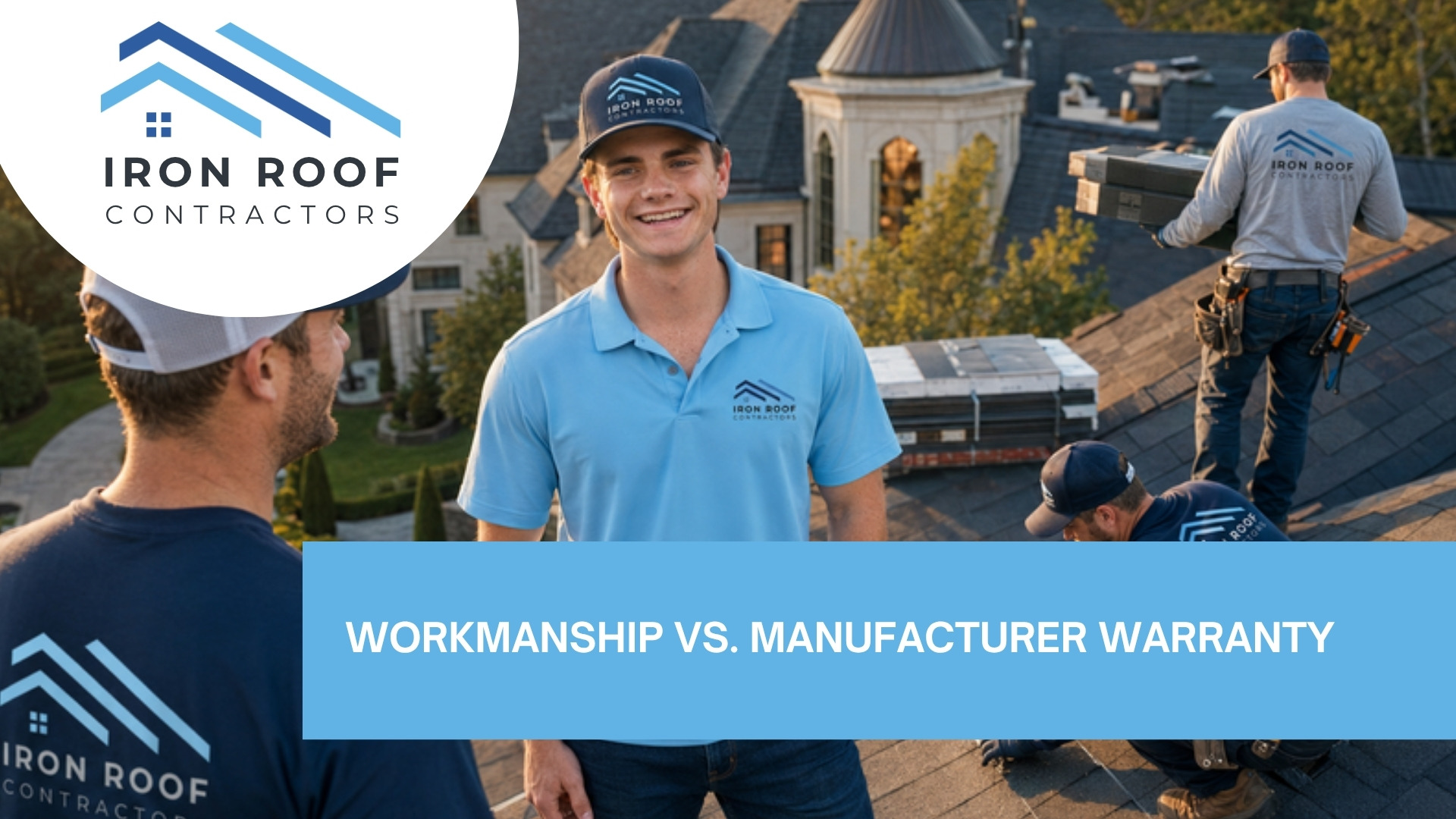
If a roofing salesman told you your new roof is “fully warrantied,” but you still have no real idea what that covers when it starts leaking in two years, you’re not alone — and you shouldn’t have to find out the hard way that nobody’s responsible. Here’s the part most people never get explained: your roof actually carries two different warranties, and they protect two completely different things. Knowing which one is the roofing workmanship warranty — and what it really covers — is what keeps you from getting stuck holding the bill.
Key Takeaways
- Your roof carries two separate warranties: the manufacturer covers the shingles and materials, while the roofer’s workmanship warranty covers how they were installed.
- Most roof leaks trace back to installation, not defective shingles, so the workmanship warranty is usually the one that actually keeps water out of your house.
- A manufacturer’s material warranty rarely pays out for a leak caused by poor installation — which is exactly where homeowners get surprised.
- Before signing, ask any roofer to put the length and terms of their workmanship warranty in writing, not just say it out loud.
- A local, family-owned roofer who lives in the Brazos Valley is far easier to hold accountable years later than a crew just passing through.
The two warranties on your roof aren’t the same thing
When a roofer says your roof is “warrantied,” they’re usually talking about two things at once — and lumping them together is how homeowners get confused.
The first is the manufacturer’s warranty. That comes from the company that made your shingles, and it covers the materials themselves. If a shingle is defective straight out of the bundle — it cracks, blisters, or falls apart earlier than it should — the manufacturer’s warranty is what covers that product. It has nothing to do with who installed your roof or how carefully they did it.
The second is the workmanship warranty. That comes from your roofer, and it covers the labor — how the shingles, flashing, and underlayment were actually put on your house. If water finds its way in because a valley was cut wrong, a pipe was flashed poorly, or nails were driven in the wrong spot, that’s a workmanship issue. The manufacturer never touched your roof, so their warranty was never going to cover it.
So you have two warranties, from two different sources, covering two different problems. One protects the product. The other protects the installation. And for most homeowners, the second one is the one that matters most.
Why most leaks trace back to installation, not the shingles
Here’s the piece that changes how you should think about all of this: the shingles are rarely the reason a roof leaks.
In the leaks we’re called out to fix, the shingle itself is almost never the culprit. Water usually gets in at the weak points — the flashing around a chimney, the seal on a plumbing boot, the valleys where two roof planes meet, or the edges where everything ties together. Those aren’t material problems. They’re installation problems. They come down to how the roof was built, not what it was built from.
That’s why the distinction matters so much. If your roof starts leaking a couple of years in, and the cause is a rushed or sloppy install, the manufacturer’s warranty on your shingles usually won’t help you. The shingles aren’t defective — they were just installed poorly. In that moment, the only thing standing between you and an out-of-pocket repair is your roofer’s workmanship warranty.
That’s the quiet reason a strong workmanship warranty is worth more than a long list of material coverage you’ll probably never use. Good shingles installed carelessly still leak. Ordinary shingles installed correctly keep water out for decades.
What a strong roofing workmanship warranty actually covers
A workmanship warranty is only as good as what’s written down. A verbal “oh, we stand behind our work” feels reassuring in the driveway, but it’s worth nothing when you’re staring at a water stain three winters later and the number’s been disconnected.
A solid roofing workmanship warranty spells out a few plain things: how long the coverage lasts, what counts as a covered installation defect, and how you get someone back out to fix it. It should be a document you can hold, not a promise you have to remember. Every Iron Roof Co install is backed by a written workmanship warranty on top of the manufacturer’s material coverage — so you’re covered on both fronts, the product and the labor, and you have the paperwork to prove it.
Think about what that looks like when something actually goes wrong. Say a plumbing boot wasn’t sealed right, and after the first hard Brazos Valley rain you spot a stain spreading across the ceiling. With a written workmanship warranty, that’s one phone call and a fix — the terms already spell out who’s responsible and for how long, so there’s nothing to argue about. Without one, it turns into a back-and-forth you’ll probably lose, and a repair you’ll probably end up paying for yourself. The paperwork is the whole difference between a quick fix and a fight.
The written part is what protects you. If it’s in writing, you can point to it. You know exactly what’s covered, for how long, and who to call. If you ever want to see how ours is laid out, our written workmanship warranty page walks through the terms in plain language. No fine-print games, no guessing.
Questions to ask any roofer before you sign
You don’t need to become a roofing expert to protect yourself. You just need to ask a few direct questions before you sign anything — and pay attention to whether the answers come in writing.
- How long is your workmanship warranty, and can I see it in writing? If the length changes depending on who you ask, or it only lives in a sentence someone said out loud, that’s your answer.
- What exactly does it cover, and what voids it? A fair warranty has terms. A roofer who can explain them clearly is one who’s thought them through.
- Will you still be here in five years? This is where it pays to know who you’re hiring. A big part of how you choose a roofing contractor is figuring out who’s actually going to answer the phone years down the road.
That last one is the whole ballgame. A workmanship warranty is a promise about the future, and it’s only as reliable as the company making it. Iron Roof Co is a father and son who live and work right here in the Brazos Valley. We answer our phones, and we’re not going anywhere — which is exactly what you want behind a warranty that’s supposed to last.
Frequently Asked Questions
Does a manufacturer’s warranty cover a roof leak?
Usually not, if the leak is caused by how the roof was installed. A manufacturer’s warranty covers defects in the shingles or materials themselves — not the labor. Since most leaks come from installation details like flashing and valleys, the roofer’s workmanship warranty is typically what applies.
What’s the difference between a manufacturer warranty and a workmanship warranty?
The manufacturer warranty covers the product — your shingles and roofing materials — against defects. The workmanship warranty covers the installation, meaning how those materials were put on your home. One comes from the shingle maker, the other comes from your roofer, and they protect against two different kinds of problems.
How long should a roofing workmanship warranty last?
It varies by roofer, which is exactly why you should ask for the length in writing before you sign. What matters more than the number of years is that the terms are clearly documented and the company is stable enough to honor them. A written warranty from a local roofer you can actually reach is worth more than a longer one from a crew that’s hard to track down.
What happens to my workmanship warranty if the roofer goes out of business?
That’s the risk with a roofer who’s only passing through — the warranty is only as good as the company behind it. It’s a big reason to hire a local, established roofer you can find years later. A stable, family-owned business in your own community is far more likely to still be around to stand behind the work.
Ready to know exactly what’s covered?
You shouldn’t have to sign anything until you understand what protects your roof and what doesn’t. When you’re ready, get a free estimate — we’ll inspect your roof, explain exactly what’s covered under both warranties, and put our workmanship warranty in writing before you commit to anything. Get the estimate, pick a date that works for you, and have your roof installed with a written warranty behind it. No pressure, no guessing.